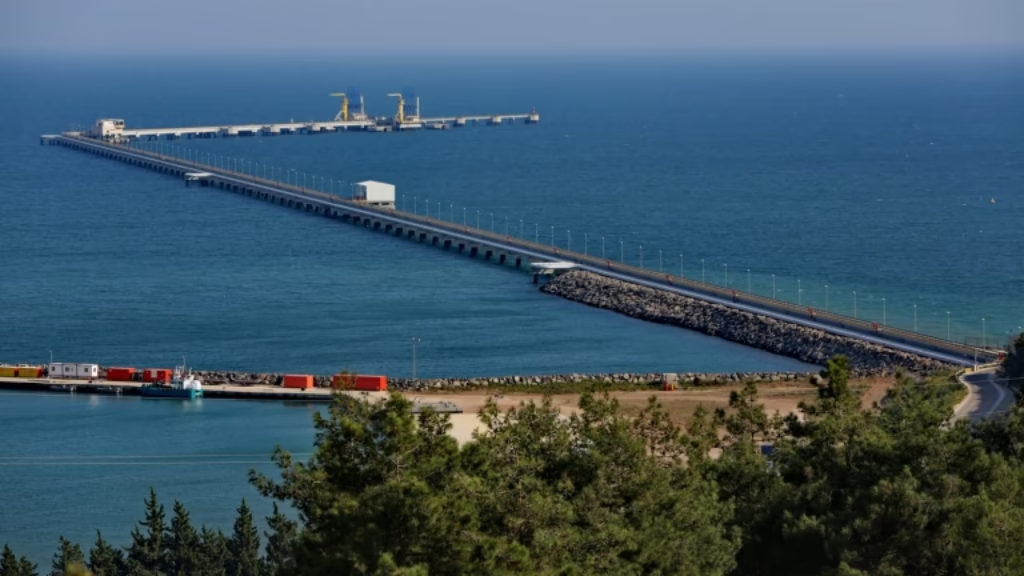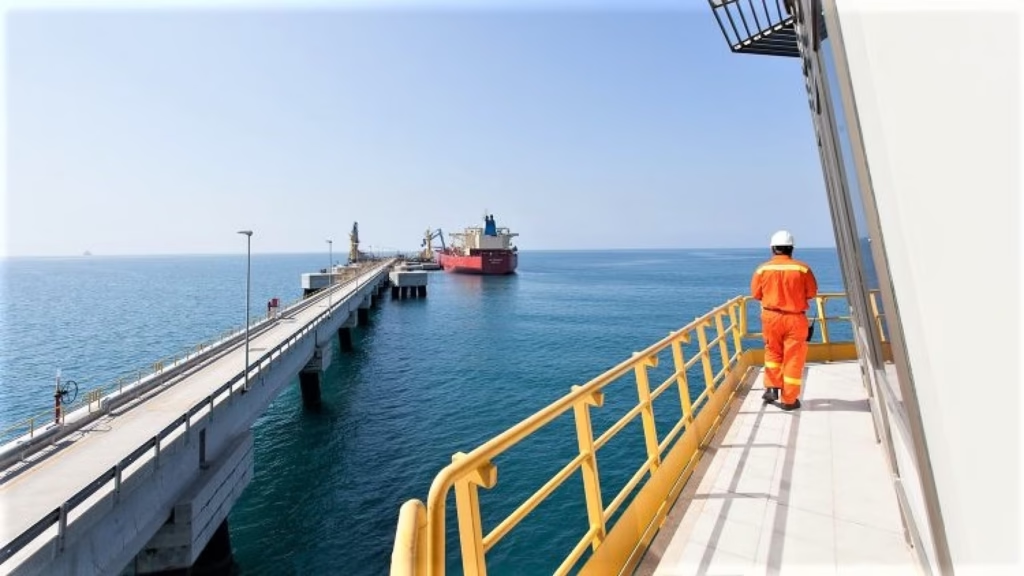
A marine oil terminal situated at the port of Ceyhan in the Turkish Mediterranean which receives hydrocarbons from offshore assets in the Caspian Sea via the Baku-Tbilisi-Ceyhan oil pipeline for further loading on tankers which carry the oil to world markets.
Ceyhan Terminal covers an area of 144 hectares (1.44 sq. km) square km. Annual export capacity is 50 million tonnes of oil.
It houses the following facilities:
- Seven crude oil storage tanks – one million barrels each – with floating roofs (100 meters in diameter and 20 meters high).
- Crude export jetty – 2.6km in length – with two berths for simultaneous loading of two tankers of up to 300,000 deadweight tonnes each.
- Backup system for monitoring and control (primary control is from Sangachal).
- 6km of lines from oil storage tanks to tanker loading area (2×42″ loading lines, 6X16″ loading arms).
- Volatile Organic Compounds (VOC) incineration plant (2×16″ VOC recovery arms, 6 VOC ground flares).
- Onsite waste water treatment plant
- Administration and staff accommodation facilities.
The terminal is operated by BOTAŞ International Limited (BIL), a Turkish state company that also operates the Baku-Tbilisi-Ceyhan pipeline on the territory of Türkiye.
The terminal became operational in June 2006.
On 23 March 2022, BTC reached a significant milestone by loading the 5000th tanker of oil transported from the Sangachal terminal near Baku across Azerbaijan, Georgia and Türkiye to Ceyhan Terminal.